Polyoxymethylene: The High-Performance Engineering Thermoplastic
In the world of precision engineering and demanding industrial applications, material selection is paramount. Among the elite polymers,
POM, or Polyoxymethylene, stands out for its exceptional blend of properties. Known for its high strength, rigidity, and excellent dimensional stability, POM is the material of choice for components that require low friction, high wear resistance, and reliable performance under mechanical stress. At Kaxite Sealing, we specialize in harnessing the full potential of advanced materials like POM to manufacture sealing solutions and technical components that meet the most stringent requirements.
Often referred to by its common brand name "acetal," POM is a semi-crystalline thermoplastic that offers a unique combination of characteristics not found in many other plastics. Its low moisture absorption, excellent chemical resistance, and good electrical insulating properties make it incredibly versatile. This article delves deep into the specifications, benefits, and applications of POM, highlighting why it is a cornerstone material for industries ranging from automotive and consumer electronics to medical devices and fluid handling systems.
**Key Properties and Advantages of POM**
The widespread adoption of POM across industries is no accident. It is the result of a superior property profile that solves complex engineering challenges.
* **High Mechanical Strength and Stiffness:** POM possesses remarkable tensile strength and rigidity, allowing it to withstand significant loads and pressures without deforming, even at elevated temperatures.
* **Excellent Dimensional Stability:** With very low moisture absorption, POM parts maintain their precise dimensions and tolerances in humid or wet environments, a critical factor for seals and gears.
* **Outstanding Wear and Friction Properties:** It has a low coefficient of friction and high resistance to abrasion, making it ideal for moving parts like bearings, sliders, and conveyor components.
* **Good Chemical Resistance:** POM resists a wide range of solvents, fuels, and neutral chemicals, ensuring longevity in aggressive environments.
* **High Fatigue Endurance:** Components made from POM can withstand repeated cyclic loading over long periods, which is essential for dynamic applications.
**Detailed Technical Parameters of Kaxite Sealing POM Materials**
To specify POM accurately for your project, understanding its technical data is crucial. Below are the detailed parameters for the standard POM grades offered by Kaxite Sealing. We provide both homopolymer and copolymer variants to suit specific needs.
**Typical Property Values Table:**
| Property | Test Standard | Unit | POM Homopolymer | POM Copolymer | Condition / Notes |
| :--- | :--- | :--- | :--- | :--- | :--- |
| **Mechanical Properties** | | | | | |
| Tensile Strength (Yield) | ASTM D638 | MPa | 70 | 62 | 23°C |
| Flexural Modulus | ASTM D790 | MPa | 3100 | 2800 | 23°C |
| Elongation at Break | ASTM D638 | % | 40 | 65 | 23°C |
| Impact Strength, Notched Izod | ASTM D256 | J/m | 80 | 75 | 23°C |
| **Thermal Properties** | | | | | |
| Melting Point | ISO 11357 | °C | 175 | 165 | - |
| Continuous Use Temperature | UL 746B | °C | 85 - 105 | 90 - 110 | In Air |
| Heat Deflection Temp. (HDT) @ 1.8 MPa | ASTM D648 | °C | 124 | 110 | - |
| **Physical Properties** | | | | | |
| Density | ISO 1183 | g/cm³ | 1.42 | 1.41 | - |
| Water Absorption (24h) | ASTM D570 | % | 0.25 | 0.22 | 23°C |
| **Electrical Properties** | | | | | |
| Volume Resistivity | IEC 60093 | Ω·cm | 10^14 | 10^14 | 23°C, 50% RH |
| Dielectric Strength | IEC 60243-1 | kV/mm | 20 | 18 | - |
**Comparison of POM Homopolymer vs. Copolymer**
For engineers, the choice between POM homopolymer and copolymer is key. Here’s a focused comparison:
| Feature | POM Homopolymer | POM Copolymer | Primary Consideration |
| :--- | :--- | :--- | :--- |
| **Mechanical Strength** | Slightly Higher | High | Homopolymer offers marginally better short-term strength. |
| **Thermal Stability** | Good | **Excellent** | Copolymer has superior long-term thermal and chemical stability. |
| **Alkaline Resistance** | Moderate | **Very Good** | Copolymer is preferred in applications involving exposure to bases. |
| **Processing Ease** | Standard | **Easier** | Copolymer typically has a wider processing window. |
| **Cost** | Generally Lower | Slightly Higher | Homopolymer can be more cost-effective for standard uses. |
At Kaxite Sealing, our material scientists can guide you in selecting the optimal POM grade—homopolymer, copolymer, or filled variants—based on your specific application's mechanical, thermal, and chemical exposure requirements.
**Common POM Grades and Modifications Offered by Kaxite Sealing**
Beyond standard grades, POM can be compounded with various additives to enhance specific properties.
* **Glass-Fiber Reinforced POM:** Significantly increases stiffness, creep resistance, and dimensional stability. Common loadings are 10%, 20%, and 30% glass fiber.
* **PTFE-Lubricated POM:** Incorporates Polytetrafluoroethylene to achieve an ultra-low coefficient of friction and exceptional wear resistance for high-speed bearing applications.
* **Anti-Static & Conductive POM:** Contains carbon fibers or other additives to dissipate static charge, critical in electronics manufacturing and explosive atmospheres.
* **UV-Stabilized POM:** Includes additives to resist degradation from prolonged exposure to sunlight or other UV sources for outdoor applications.
**Frequently Asked Questions (FAQ) About POM**
**Q: What are the main differences between POM and Nylon (PA)?**
A: While both are strong engineering plastics, key differences exist. POM generally has better dimensional stability due to lower moisture absorption, superior creep resistance, and excellent inherent lubricity. Nylon typically offers higher impact strength and better resistance to certain chemicals like acids. The choice depends on the environmental and mechanical stresses the part will face.
**Q: Can POM be used for food contact or medical applications?**
A: Yes, specific grades of POM copolymer are FDA compliant and meet various international regulations for food contact (e.g., EU 10/2011). For medical applications, biocompatible grades that can be sterilized (e.g., using gamma radiation or EtO) are available. It is essential to specify the correct, certified grade from your supplier, such as Kaxite Sealing, for these sensitive applications.
**Q: How does temperature affect POM's performance?**
A: POM performs reliably from approximately -40°C to +100°C continuously. Its mechanical properties, such as stiffness, gradually decrease as temperature rises but remain usable within this range. Prolonged exposure to temperatures above 120-140°C can lead to thermal degradation and loss of properties. For high-temperature applications, the thermal stabilization of the copolymer grade is advantageous.
**Q: Is POM resistant to all chemicals?**
A: No material is universally resistant. POM exhibits excellent resistance to hydrocarbons, solvents, alcohols, and neutral chemicals. However, it is not recommended for use with strong acids, strong bases (especially homopolymer), or chlorine. Always consult chemical resistance charts and, if in doubt, conduct compatibility tests with the specific chemical media involved.
**Q: What are the best methods for joining or assembling POM components?**
A: POM components can be effectively assembled using various techniques. Mechanical fastening with screws (especially with pre-tapped holes or inserts) works well. Ultrasonic welding, vibration welding, and spin welding are excellent methods for creating strong, hermetic bonds between POM parts. Adhesive bonding is possible but requires specialized adhesives (like cyanoacrylates) and surface preparation to ensure a strong bond.
**Q: Why should I choose Kaxite Sealing for my POM components?**
A: Kaxite Sealing brings decades of expertise in precision polymer processing. We don't just supply material; we provide engineered solutions. Our in-depth knowledge of POM's behavior allows us to offer design for manufacturability (DFM) feedback, select the perfect grade or compound, and manufacture parts with tight tolerances and consistent quality. Our commitment to technical support ensures your POM application performs as intended from prototype to full-scale production.
**Q: Can POM be machined from stock shapes?**
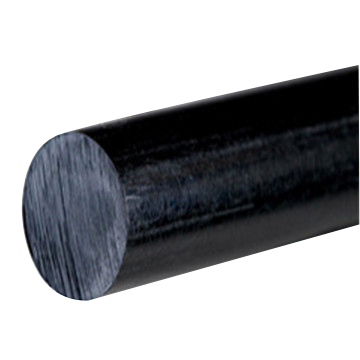
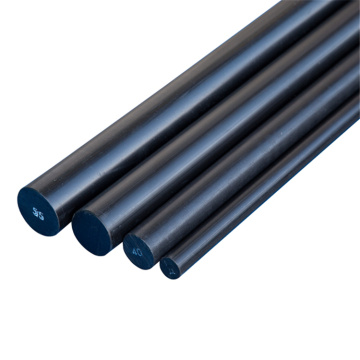
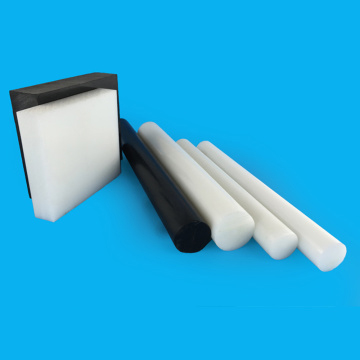
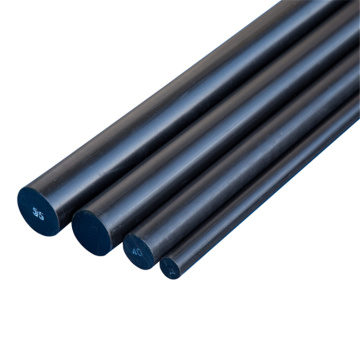
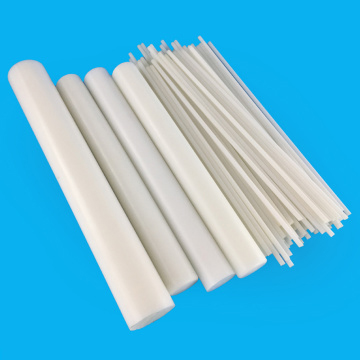
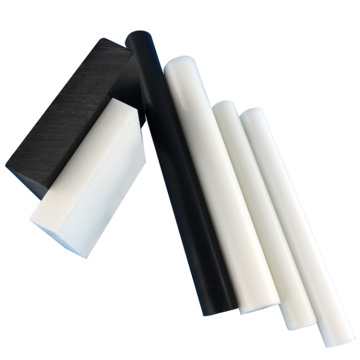
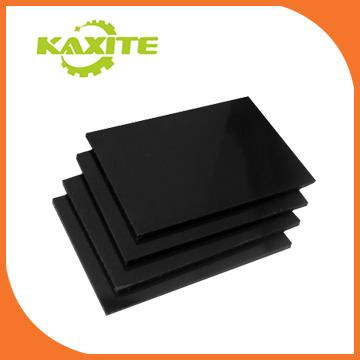
A: Absolutely. POM is an excellent material for machining from rods, plates, or tubes. It machines cleanly with sharp tools, producing smooth surfaces and precise features. This makes it ideal for prototyping, low-volume production, or creating complex parts that are not economical to mold. Kaxite Sealing offers a range of POM stock shapes for such purposes.
**Applications of POM in Industry**
The property set of POM makes it indispensable in countless precision applications.
* **Automotive:** Fuel system components (caps, valves), door lock systems, window regulators, gears in seat adjusters, and clips/fasteners.
* **Consumer Appliances:** Gears and bearings in printers, coffee machines, and power tools; zippers; spray bottle mechanisms.
* **Fluid Handling:** Pump housings, valve bodies, ball valve seats, meter gears, and seal rings. Kaxite Sealing extensively uses POM for precision seals in hydraulic and pneumatic systems.
* **Medical:** Inhaler mechanisms, metering devices, surgical staplers, and housings for medical instruments (using compliant grades).
* **General Engineering:** Precision gears, bearings, bushings, rollers, conveyor links, and fasteners requiring high strength and low friction.
**Processing Guidelines for POM**
Successful use of POM depends on proper processing. For injection molding, which is the most common method, key parameters include:
* **Drying:** Essential. Dry at 80-105°C for 2-4 hours to reduce moisture below 0.1%.
* **Melt Temperature:** Typically 190-215°C for copolymers.
* **Mold Temperature:** 60-120°C. A hotter mold improves surface finish and crystallinity.
* **Shrinkage:** Account for a mold shrinkage of approximately 1.8-2.5%, which varies with grade, wall thickness, and processing conditions.