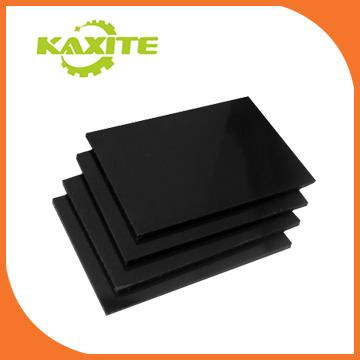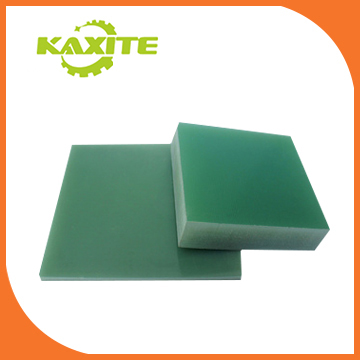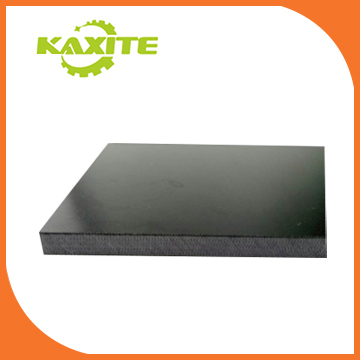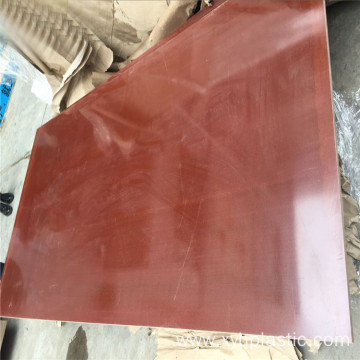
In demanding industrial and commercial environments, material performance is non-negotiable. Standard materials often fail under stress, leading to downtime, safety concerns, and increased costs. Kaxite Sealing provides the definitive answer with our high-performance Phenolic Laminated Sheets. Engineered through a thermosetting process that bonds layers of resin-impregnated paper or fabric under high heat and pressure, this material transforms into a dimensionally stable, incredibly durable sheet with exceptional mechanical and electrical properties. It is the go-to material for applications requiring high strength, low moisture absorption, excellent electrical insulation, and superior machinability. From heavy-duty jigs and fixtures in aerospace manufacturing to insulating components in electrical switchgear, our Phenolic Laminated Sheets deliver consistent, reliable performance where it matters most.
Choosing Kaxite Sealing's Phenolic Laminated Sheets means investing in a material built for resilience and precision. Our sheets are manufactured under strict quality controls to ensure every batch meets the highest industry standards.
The following tables detail the standard specifications for Kaxite Sealing's Phenolic Laminated Sheets across our most popular grades. Custom formulations are available upon request to meet unique application challenges.
| Property | Test Method | Grade X (Paper Base) | Grade XX (Paper Base, Heat Resistant) | Grade LE (Linen Base) | Grade CE (Cotton Canvas) |
|---|---|---|---|---|---|
| Density (g/cm³) | ASTM D792 | 1.34 - 1.38 | 1.34 - 1.38 | 1.32 - 1.36 | 1.34 - 1.38 |
| Tensile Strength (MPa) | ASTM D638 | ≥ 85 | ≥ 80 | ≥ 75 | ≥ 90 |
| Compressive Strength (MPa) | ASTM D695 | ≥ 210 | ≥ 200 | ≥ 180 | ≥ 230 |
| Flexural Strength (MPa) | ASTM D790 | ≥ 110 | ≥ 105 | ≥ 100 | ≥ 120 |
| Impact Strength (Izod, J/m) | ASTM D256 | 0.35 - 0.50 | 0.30 - 0.45 | 0.80 - 1.20 | 1.50 - 2.50 |
| Water Absorption (24h, %) | ASTM D570 | ≤ 0.8 | ≤ 0.7 | ≤ 1.2 | ≤ 1.0 |
| Property | Test Method | Grade X | Grade XX | Grade LE | Grade CE |
|---|---|---|---|---|---|
| Continuous Service Temperature (°C) | - | 120 | 150 | 110 | 105 |
| Dielectric Strength (kV/mm, perpendicular) | ASTM D149 | ≥ 14 | ≥ 13 | ≥ 12 | ≥ 10 |
| Insulation Resistance (MΩ) | ASTM D257 | ≥ 10^5 | ≥ 10^5 | ≥ 10^4 | ≥ 10^4 |
| Comparative Tracking Index (CTI, V) | IEC 60112 | ≥ 175 | ≥ 150 | ≥ 125 | ≥ 100 |
| Grade | Standard Sheet Size (mm) | Common Thickness Range (mm) | Standard Color |
|---|---|---|---|
| Grade X, Grade XX | 1220 x 2440, 1000 x 2000 | 0.5 to 50.0 | Natural (Brown), Black |
| Grade LE | 1220 x 2440, 1000 x 2000 | 1.0 to 75.0 | Natural (Linen) |
| Grade CE | 1220 x 2440, 1000 x 2000 | 3.0 to 100.0 | Natural (Canvas) |
The versatility of Kaxite Sealing Phenolic Laminated Sheet makes it a critical material in numerous sectors. Its unique combination of properties solves complex engineering challenges.
What is the main difference between paper-based and fabric-based phenolic laminated sheets?
The core reinforcement material defines the key characteristics. Paper-based sheets (like our Grade X and XX) offer superior electrical insulation properties, smoother surface finish, and excellent machinability for intricate parts. Fabric-based sheets (like our Grade LE and CE) provide higher impact strength, better mechanical durability in shear, and improved resilience in high-vibration applications. The linen base (LE) offers a good balance, while cotton canvas (CE) provides the highest mechanical strength and impact resistance.
How do I choose the right grade for my application?
Selection depends on the primary performance requirement. For electrical insulation with precision machining, choose Grade X or XX (for higher heat). For structural parts needing good impact resistance, choose Grade LE. For heavy-duty mechanical applications like bearings or gears under high load, Grade CE is typically recommended. The Kaxite Sealing technical team can provide detailed guidance based on your specific load, environmental, and regulatory needs.
Can phenolic laminated sheets be used outdoors?
While phenolic laminated sheets have low moisture absorption and good dimensional stability, they are not typically recommended for prolonged, unprotected outdoor exposure. Ultraviolet (UV) radiation from sunlight can cause surface degradation and discoloration over time. For outdoor use, the sheets should be protected with a suitable paint, coating, or housed within an assembly that shields them from direct weathering.
What are the best machining practices for phenolic laminated sheets?
Use sharp, carbide-tipped tools for clean cuts. Employ moderate to high cutting speeds with slow, steady feed rates to prevent chipping, especially on the edges. Always use coolant or compressed air to dissipate heat and clear chips, as excessive heat can soften the resin locally. For drilling, backing material should be used to prevent breakout. Safety precautions, including dust extraction and personal protective equipment (PPE), are essential as machining generates fine dust.
How does the heat resistance of phenolic compare to other engineering plastics?
Phenolic laminated sheets generally offer higher continuous use temperatures (typically 120°C to 150°C for standard grades) than many thermoplastics like nylon or PVC. While some high-temperature thermoplastics (e.g., PEEK) can exceed this, phenolic provides this thermal performance at a significantly lower cost while maintaining its excellent dimensional stability and non-melting characteristic. Under heat, it will char rather than melt or drip.
Are Kaxite Sealing phenolic sheets compliant with industry standards?
Yes. Our manufacturing process and materials are designed to meet or exceed relevant international standards, including NEMA (LI 1, FR-2), IEC (60893), and ASTM specifications for laminated thermosetting materials. Specific grades can be certified for RoHS, REACH, and for certain applications, FDA or USDA compliance. Certificates of compliance and test reports are available upon request.
Can you supply custom-sized or fabricated parts?
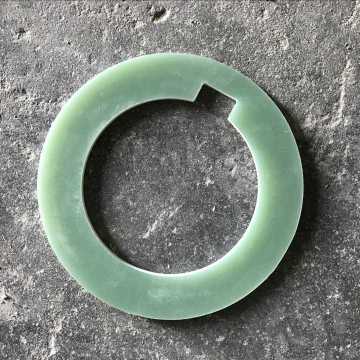
Absolutely. Kaxite Sealing specializes not only in supplying standard and custom-sized sheets but also in providing precision-fabricated components. Our in-house machining capabilities allow us to deliver ready-to-install parts—cut to size, drilled, milled, turned, or finished to your exact drawings—saving you time, reducing material waste, and ensuring part accuracy.
For over two decades, Kaxite Sealing has been a trusted global supplier of high-performance engineered materials. Our commitment goes beyond just supplying product. We offer in-depth technical support, from material selection and design consultation to troubleshooting application challenges. Our state-of-the-art manufacturing ensures consistent quality, and our global logistics network guarantees reliable delivery. When you specify Kaxite Sealing Phenolic Laminated Sheets, you are choosing a partner dedicated to the success and reliability of your project.
3021 3025 Phenolic Cotton&Paper Laminated Sheet are used in the fabrication of insulating components for applications such as switchgear, electric motors and transformers. Paper-based industrial laminates provide the electrical engineer with a choice of different grades of high quality material possessing excellent insulating properties and good mechanical features. Specification Regular Size:1020x2020mm/1220x2440mm Thickiness:2-30mm,3-100mm Color:Brown
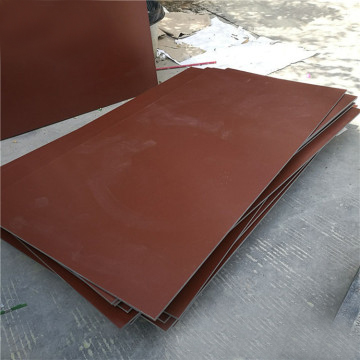
3021&3025 Phenolic Cotton&Paper Laminate Sheet are used in the fabrication of insulating components for applications such as switchgear, electric motors and transformers. Paper-based industrial laminates provide the electrical engineer with a choice of different grades of high quality material possessing excellent insulating properties and good mechanical features. Specification Regular Size:1020x2020mm/1220x2440mm Thickiness:2-30mm,3-100mm Color:Brown