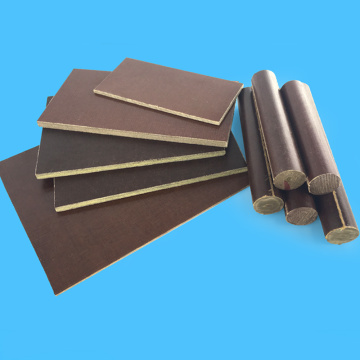
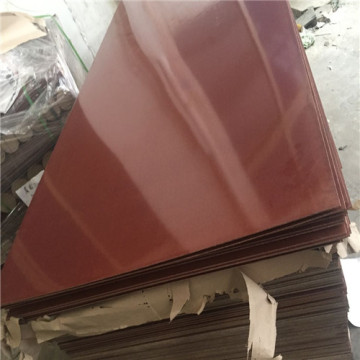
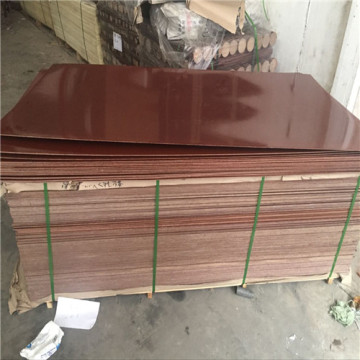
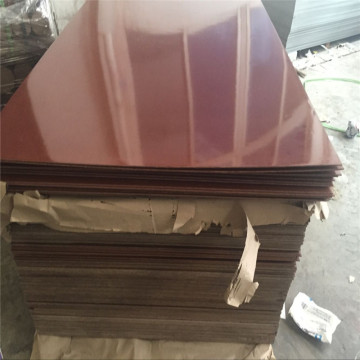
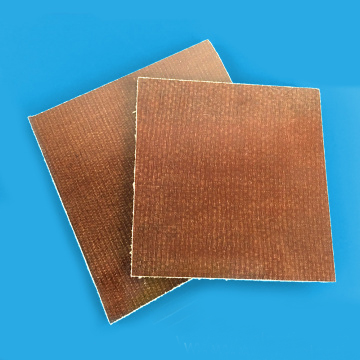
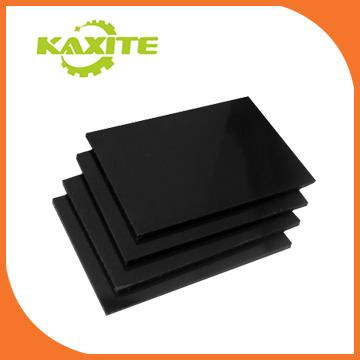
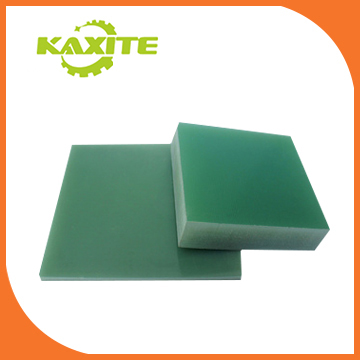
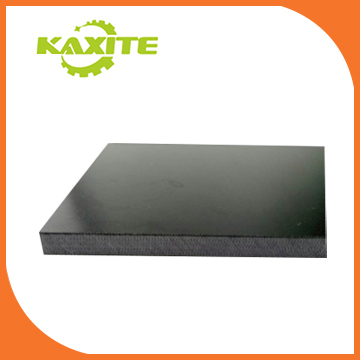
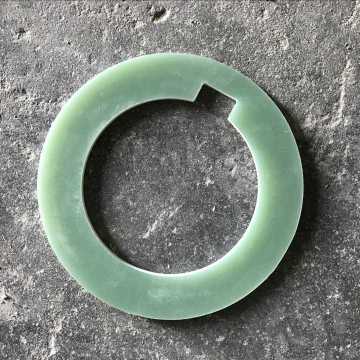
3025 Phenolic Cotton Laminated Sheet is a high-performance industrial insulating material known for its excellent mechanical strength, electrical properties, and thermal stability. This grade of phenolic laminate is fabricated by impregnating layers of woven cotton fabric with a phenolic resin binder under high heat and pressure. The result is a robust, dimensionally stable sheet material that performs reliably in demanding electrical and mechanical applications. At Kaxite Sealing, we engineer our 3025 sheets to meet rigorous international standards, ensuring they deliver consistent performance for insulation, structural components, and bushings in various industries.
This material is particularly valued for its balanced combination of properties. It offers good electrical insulation even under moderately humid conditions, impressive impact strength for a laminate, and can be machined with standard workshop tools into precise components like gears, rollers, and terminal boards. Its versatility makes it a go-to material for electrical engineers, mechanical designers, and maintenance professionals seeking a dependable, fabric-based laminate.
**Key Characteristics of 3025 Phenolic Cotton Laminated Sheet**
* **Base Material:** Continuous filament woven cotton fabric.
* **Binder:** Thermosetting phenolic resin.
* **Form:** Sheets, rods, tubes, and fabricated parts.
* **Primary Color:** Typically natural (tan/brown) or black.
* **Key Property Balance:** Good mechanical strength paired with reliable electrical insulation.
### In-Depth Technical Specifications & Properties
For engineers and procurement specialists, detailed technical data is crucial for material selection and design validation. The following tables outline the standard properties of Kaxite Sealing's 3025 Phenolic Cotton Laminated Sheet.
**Table 1: Physical & Mechanical Properties**
| Property | Test Method / Condition | Typical Value | Unit |
| :--- | :--- | :--- | :--- |
| **Specific Gravity** | ASTM D792 | 1.33 - 1.36 | |
| **Water Absorption** | ASTM D570 (24h immersion) | 0.8 - 1.5 | % |
| **Tensile Strength** | ASTM D638 (Flatwise) | 70 - 85 | MPa (10,000 - 12,300 psi) |
| **Flexural Strength** | ASTM D790 (Flatwise) | 100 - 130 | MPa (14,500 - 18,900 psi) |
| **Compressive Strength** | ASTM D695 (Flatwise) | 210 - 250 | MPa (30,500 - 36,300 psi) |
| **Impact Strength, Izod** | ASTM D256 (Notched, Edgewise) | 0.9 - 1.2 | J/cm (17 - 22 ft-lb/in) |
| **Rockwell Hardness** | ASTM D785 (M Scale) | 100 - 110 | M Scale |
**Table 2: Thermal & Electrical Properties**
| Property | Test Method / Condition | Typical Value | Unit |
| :--- | :--- | :--- | :--- |
| **Continuous Use Temperature** | — | 120 - 130 | °C (248 - 266 °F) |
| **Thermal Conductivity** | ASTM C177 | 0.25 - 0.35 | W/m·K |
| **Dielectric Strength** | ASTM D149 (Perpendicular, 1/8" thick) | 8.0 - 12.0 | kV/mm (200 - 300 V/mil) |
| **Volume Resistivity** | ASTM D257 (at 23°C, 50% RH) | 1.0 x 10^9 - 1.0 x 10^11 | Ohm·cm |
| **Dissipation Factor (tan δ)** | ASTM D150 (at 1 MHz) | 0.04 - 0.07 | |
| **Comparative Tracking Index (CTI)** | IEC 60112 | 150 - 200 | V |
**Table 3: Standard Sheet Sizes & Tolerances (Kaxite Sealing)**
| Dimension | Standard Range | Tolerance |
| :--- | :--- | :--- |
| **Sheet Thickness** | 1/16" (1.6mm) to 2" (50.8mm) | ±0.005" to ±0.015" (varies by thickness) |
| **Sheet Width** | 36" (914mm) or 48" (1219mm) | +1/8", -0" (+3.2mm, -0mm) |
| **Sheet Length** | 48" (1219mm) or 96" (2438mm) | +1/8", -0" (+3.2mm, -0mm) |
| **Panel Size** | 36" x 48", 48" x 48", 48" x 96" | As per width/length tolerances |
### Common Applications Across Industries
The 3025 Phenolic Cotton Laminated Sheet finds utility in numerous sectors due to its robust nature.
**Electrical Power & Distribution:**
* **Insulating Structural Parts:** Slot wedges, arc barriers, and coil spreaders in motors and generators.
* **Bus Bar Insulation & Supports:** Insulating spacers and supports for low to medium voltage bus bars.
* **Switchgear Components:** Mounting panels, operating levers, and insulating barriers within electrical enclosures.
**Industrial Machinery:**
* **Wear Plates & Bearings:** Low-speed, high-load bearings and wear plates for machinery, especially where lubrication is sparse.
* **Gears & Rollers:** Non-metallic gears, conveyor rollers, and guide rollers where electrical insulation or noise reduction is beneficial.
* **Jigs & Fixtures:** Machined components for manufacturing fixtures due to its stability and machinability.
**Transportation & Automotive:**
* **Insulating Washers & Bushings:** Used in automotive electrical systems and traditional ignition distributors.
* **Non-Critical Structural Insulators:** Components in rolling stock and marine applications requiring vibration damping and insulation.
**General Fabrication:**
* **Terminal Boards & Panels:** Machined panels for mounting electrical terminals, transformers, and other components.
* **General Purpose Insulation:** Where a tough, fabric-based insulating material is needed for mechanical protection alongside electrical isolation.
### Machining and Fabrication Guidelines
3025 phenolic cotton laminate is renowned for its excellent machinability. It can be sawed, drilled, turned, milled, and tapped using standard high-speed steel or carbide tools designed for plastics or non-ferrous metals.
**Best Practices for Machining:**
* **Tools:** Use sharp, polished cutting tools with positive rake angles. Carbide-tipped tools are recommended for high-volume production.
* **Cooling:** Air blast or vacuum removal of chips is preferred. If a coolant is necessary, use a water-soluble type to prevent resin softening.
* **Speeds & Feeds:** Employ high cutting speeds with moderate feed rates to achieve a clean finish and avoid excessive heat buildup.
* **Tolerancing:** The material is stable but can exhibit slight spring-back. For precision parts, allow for fine finishing passes and consider the material's nominal tolerances in your design.
* **Dust Control:** Always use appropriate dust collection systems, as machining generates fine particulate.
### Frequently Asked Questions (FAQ)
**What is the main difference between 3025 phenolic cotton sheet and paper or glass-based phenolic laminates?**
The base reinforcement material defines the key differences. The 3025 grade uses woven cotton fabric, which gives it higher impact strength, better shock resistance, and greater ability to damp vibration compared to paper phenolics (which have better electrical properties at low humidity) or glass phenolics (which offer superior mechanical strength and temperature resistance). It's the preferred choice for parts requiring a combination of toughness and electrical insulation.
**Can the 3025 Phenolic Cotton Laminated Sheet be used outdoors or in wet environments?**
While it has moderate moisture resistance, it is not recommended for prolonged outdoor exposure or continuous immersion in water. The phenolic resin provides some protection, but the cotton fabric can absorb moisture over time, which will degrade electrical insulation properties. For outdoor or high-humidity applications, a sealant or coating may be necessary, or consider alternative materials like glass epoxy or specific outdoor-grade laminates.
**What are the temperature limits for continuous and short-term service?**
The recommended maximum continuous operating temperature for the 3025 phenolic cotton laminated sheet is in the range of 120°C to 130°C (248°F to 266°F). For short-term exposure, it can withstand temperatures up to approximately 150°C (302°F) without catastrophic failure, but mechanical strength and electrical properties will be significantly reduced at the higher end of this range. Always consult specific Kaxite Sealing data sheets for the exact grade.
**How does it perform in terms of flame resistance?**
Phenolic cotton laminates like the 3025 grade are inherently flame retardant. The phenolic resin is self-extinguishing; when exposed to a flame, it will char but typically not support combustion once the flame source is removed. It generally meets standards such as UL 94 V-1 or V-0 depending on the exact formulation and thickness. For certified ratings, request the relevant test reports from Kaxite Sealing.
**Is this material suitable for food contact or medical applications?**
Standard 3025 phenolic cotton laminate is not specifically designed or certified for direct food contact or medical implant applications. It may contain additives and is not manufactured under the controlled conditions required for such uses. For applications in food processing equipment or medical devices, you must select materials that are explicitly rated and certified (e.g., FDA compliant, USP Class VI) for those purposes.
**What file formats or standards are available for technical drawings and CAD models?**
Kaxite Sealing typically provides detailed PDF specifications and material data sheets. For standard shapes like sheets, rods, and tubes, 2D drawings with tolerances are available. For specific fabricated parts, customers are encouraged to supply their own detailed drawings. STEP or IGES files for generic material blocks may be available upon request to aid in design.
**How should I store and handle 3025 phenolic sheets to prevent damage or warping?**
Store sheets flat on a level, solid shelf in a cool, dry environment away from direct sunlight and heat sources. Avoid leaning sheets against a wall, as this can cause warping over time. Keep the material in its original packaging until use to protect it from moisture and dirt. When handling, wear gloves to prevent skin oils from contaminating the surface, especially if it will be used for electrical insulation.
**Can Kaxite Sealing provide custom fabricated parts from 3025 material?**
Yes, Kaxite Sealing offers comprehensive fabrication services. We can precision machine components to your specifications, including complex geometries, tight tolerances, and specific surface finishes. Providing a detailed drawing with material callout (e.g., Kaxite Sealing 3025 Phenolic Cotton Laminate) allows our engineering team to provide an accurate quote and ensure the part meets your application requirements.