Acrylonitrile Butadiene Styrene, commonly known as ABS, is a versatile and widely used thermoplastic polymer. It is renowned for its exceptional combination of strength, rigidity, and impact resistance. For professionals and hobbyists alike, ABS rod stock is a fundamental material in fabrication, prototyping, and industrial applications. At Kaxite Sealing, we specialize in providing high-quality engineering plastics, and our premium-grade ABS rods are manufactured to meet the most demanding specifications.
An ABS rod is a cylindrical stock form of ABS plastic. It is produced through an extrusion process, resulting in a solid, durable, and easily machinable material. Its popularity stems from its excellent mechanical properties and good chemical resistance. Unlike metals, ABS is lightweight, electrically insulating, and does not corrode. It also offers good dimensional stability and a relatively low melting point, making it suitable for various machining and thermoforming processes.
The key advantages of using ABS rod from Kaxite Sealing include:
Our ABS rods are produced from prime, virgin-grade material to ensure consistency, purity, and optimal performance in every batch. We offer a comprehensive range of diameters and lengths to suit diverse project requirements.
| Property | Test Method | Typical Value (Imperial) | Typical Value (Metric) |
|---|---|---|---|
| Tensile Strength | ASTM D638 | 6,500 psi | 45 MPa |
| Flexural Strength | ASTM D790 | 11,000 psi | 76 MPa |
| Impact Strength (Izod Notched) | ASTM D256 | 5.0 ft-lb/in | 267 J/m |
| Heat Deflection Temperature @ 264 psi | ASTM D648 | 215 °F | 102 °C |
| Specific Gravity | ASTM D792 | 1.04 | 1.04 g/cm³ |
| Rockwell Hardness | ASTM D785 | R 110 | R 110 |
Kaxite Sealing offers ABS rods in a variety of standard diameters and lengths. Custom sizes can also be quoted upon request.
| Nominal Diameter (Inches) | Nominal Diameter (mm) | Standard Length (Feet) | Standard Length (Meters) | Tolerance |
|---|---|---|---|---|
| 1/4" | 6.35 | 6 ft, 12 ft | 1.83 m, 3.66 m | ±0.005" |
| 1/2" | 12.7 | 6 ft, 12 ft | 1.83 m, 3.66 m | ±0.005" |
| 3/4" | 19.05 | 6 ft, 12 ft | 1.83 m, 3.66 m | ±0.005" |
| 1" | 25.4 | 6 ft, 12 ft | 1.83 m, 3.66 m | ±0.010" |
| 2" | 50.8 | 6 ft | 1.83 m | ±0.015" |
| 3" | 76.2 | 6 ft | 1.83 m | ±0.020" |
The utility of ABS rod extends across numerous industries. Here are some of its most common uses:
Q: What are the main limitations of ABS rod?
A: While versatile, ABS has limitations. It has a relatively low continuous service temperature (typically around 160-180°F or 70-80°C) and is not suitable for high-temperature applications. It has poor resistance to sunlight (UV) unless specially stabilized, and it can be attacked by certain solvents like acetone, ketones, and esters. It is also flammable and should not be used where flame resistance is a critical requirement without appropriate additives.
Q: How does Kaxite Sealing ensure the quality of its ABS rods?
A: Kaxite Sealing is committed to quality. We source only virgin-grade ABS resin from reputable suppliers. Our extrusion process is tightly controlled to maintain consistent diameter, roundness, and internal stress levels. Every production batch is subject to quality checks for key properties like dimensions, visual appearance, and density. We provide material data sheets and certificates of compliance to give our customers full confidence in the material they receive.
Q: Can ABS rod be threaded or tapped?
A: Yes, ABS rod is excellent for threading and tapping. Its toughness and machinability allow for clean, strong threads to be cut. It is recommended to use sharp tools and standard tap drill sizes for plastics. For best results, use a slower cutting speed and a consistent feed to prevent melting or gumming of the material.
Q: What is the best way to glue or bond ABS rod pieces together?
A: The most effective method for bonding ABS to ABS is using a solvent cement specifically designed for ABS or a general-purpose plastic adhesive containing methylene chloride or tetrahydrofuran. These cements work by slightly dissolving the surfaces, allowing them to fuse together as the solvent evaporates, creating a very strong bond. Cyanoacrylate (super glue) and epoxy adhesives also work well for both ABS-to-ABS and ABS-to-other-material bonds.
Q: Is ABS rod suitable for outdoor use?
A: Standard ABS rod is not recommended for long-term, unprotected outdoor use. Ultraviolet (UV) radiation from sunlight causes degradation, leading to discoloration (yellowing) and a reduction in impact strength over time. For outdoor applications, it is essential to specify UV-stabilized ABS grades, which Kaxite Sealing can provide, or to apply a protective UV-resistant paint or coating.
Q: How does ABS compare to other common plastic rods like Acetal (POM) or Nylon?
A: Each material has its niche. ABS offers superior impact strength and better surface finish for painting compared to Acetal and Nylon. Acetal (POM) has lower moisture absorption, higher stiffness, and excellent wear resistance, making it better for precision gears and bearings. Nylon (PA) has higher heat resistance, excellent wear properties, and is tougher, but it absorbs moisture which affects its dimensions and properties. ABS typically provides the best balance of impact, machinability, and cost for general-purpose applications.
Q: What safety precautions should I take when machining ABS rod?
A: Always wear appropriate personal protective equipment (PPE), including safety glasses and a dust mask or respirator. Machining ABS generates fine plastic particles and potentially fumes, especially at high speeds that cause melting. Work in a well-ventilated area. Use sharp tools and proper cutting speeds to minimize heat buildup, which can produce irritating fumes. Secure the workpiece firmly to prevent kickback.
Q: Can Kaxite Sealing provide custom-colored or FDA-compliant ABS rods?
A: Yes, Kaxite Sealing offers a range of services to meet specific customer needs. We can provide ABS rods in various standard colors (black, white, gray, beige, etc.) and can also quote on custom color matching for large-volume orders. We also supply ABS rod grades that comply with FDA regulations 21 CFR for food contact applications, subject to specific conditions of use. Please contact our sales team with your detailed requirements for a tailored solution.
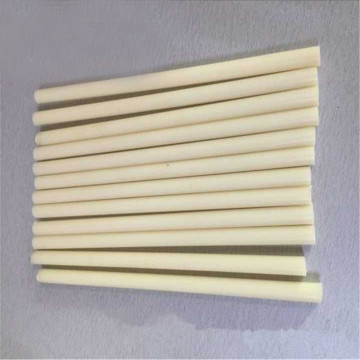
Quality Rigid Engineer Plastic ABS Round Bar Rod to keep an ester composition of the material is the biggest heavy quality, poor thermal conductivity. The temperature between the molding temperature it depends on both raw materials, is 240--265 degrees, the temperature is too high, ABS will decompose liquidity too low PC material is poor. Engineer Plastic ABS Round Bar Rod has good chemical and stress resistance .It combines toughness with rigidity and creep resistance . Easily thermoformed resulting in excellent mould detail .Easily machined , die cut , routed , sanded , buffed and polished.
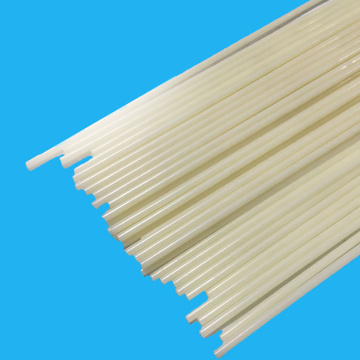
5mm Extruded Thermoformed ABS Plastic Rod to keep an ester composition of the material is the biggest heavy quality, poor thermal conductivity. The temperature between the molding temperature it depends on both raw materials, is 240--265 degrees, the temperature is too high, ABS will decompose liquidity too low PC material is poor. Thermoformed ABS Plastic Rod has good chemical and stress resistance .It combines toughness with rigidity and creep resistance . Easily thermoformed resulting in excellent mould detail .Easily machined , die cut , routed , sanded , buffed and polished.